
Let’s put Coach Rupp’s record in context as we consider his ‘complicated gift’ to UK
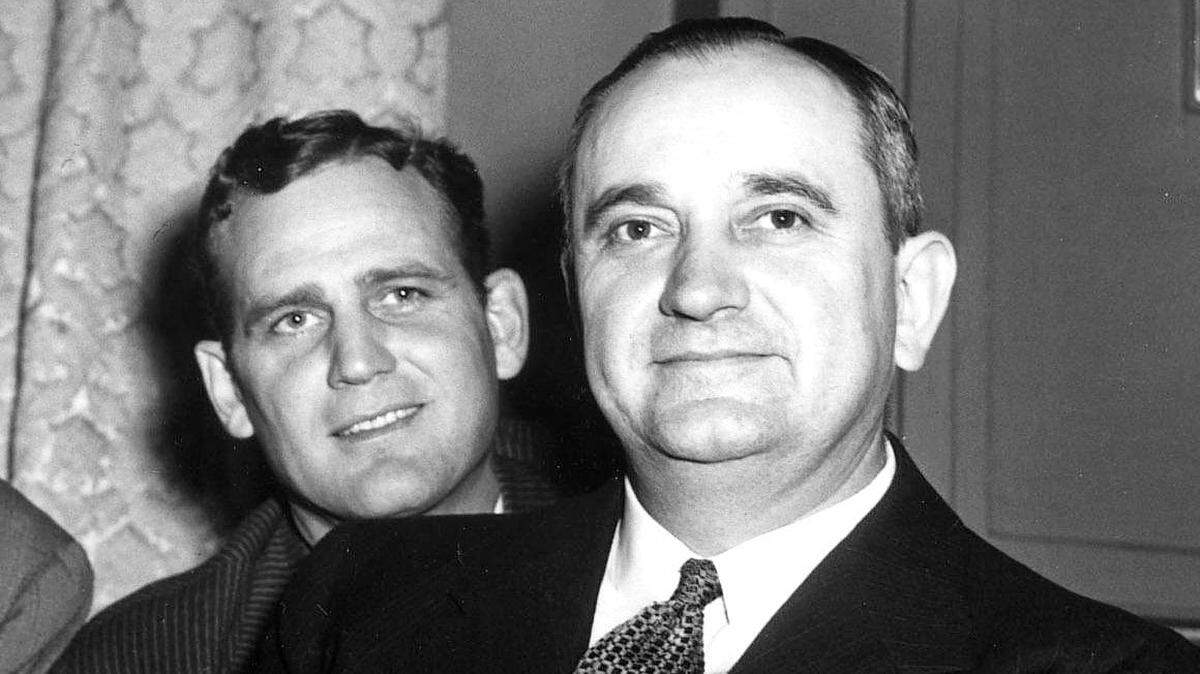
Nearly three weeks ago, the faculty of the African American and Africana Studies program at the University of Kentucky signed an open letter addressed to President Eli Capilouto. It includes a list of ten suggestions for reform. The letter calls for improving the treatment of staff, better educating our students about the costs of racial inequality, increasing the number of Black faculty and administrators, better accountability for violating harassment policies, and improving support for students of color. The tenth item on the list is a call for the university to rename Rupp Arena. Of the ten items included in the letter, the proposal to change the name of the venue to Wildcat Arena or another university-centric moniker was the only item to receive much attention in the press.
Rupp’s defenders immediately accused the letter’s signatories of participating in cancel culture. Dick Gabriel, who hosts “Big Blue Insider” on a local radio station, chastised us for creating a “mob situation,” refusing to consider “context and important facts.” Clay Travis, who hosts a hybrid sports and conservative politics media platform, attacked us because Rupp “had racist beliefs and so did every single other person who lived in the 1930s, 1940s, and the 1950s.” Echoing a common complaint, he says that cancel culture is anachronistic.
When I hear the phrase cancel culture being used in the Rupp debate, however, I cannot help thinking that Rupp’s teams epitomized the idea. Between 1930, his first year as coach, and 1970, two years before his retirement, when the first Black player joined the squad, Rupp was a practicing segregationist. Some people say Rupp was racist, some say he was not. What we know for sure is that UK’s basketball team was racially segregated during most of his tenure, canceling players who were not white. He was hardly alone. Our country has consistently undervalued and under-reported the contributions to our society made by people of color. The victims of cancel culture are not practicing segregationists, like Rupp, but the people his teams excluded.
We should reflect on this context and these facts as we take the measure of Rupp’s sporting achievements. Rupp’s teams won an extraordinary 876 games in his 41 seasons at the helm, from 1930-1972. His teams won over 82% of their games. His teams won 4 national championships and 28 conference titles. He was the best coach in the SEC, arguably the best coach of his generation.
When we put some context around these numbers, however, they look much less impressive. In 1966, in the national championship game, Rupp’s all-white team faced Texas Western, whose starting five were all African American players. It looked like a matchup of David and Goliath, but we know UK lost that game. Rupp’s teams would not win another national championship and the program went through a fallow period as UCLA dominated the sport for more than a decade. Kentucky’s slowness to integrate its team undermined its chance of success on the court. Rupp belatedly integrated the program because he came to the realization that he could not compete at the top level with an all-white team. Unfortunately, for Rupp, changing UK’s cancel culture happened too slowly for the Wildcats to remain on a par with the game’s top programs.
Rupp’s 876 victories and lofty winning percentage begin to look less astonishing when we realize that cancel culture was part of the SEC, too. Before 1967, SEC men’s basketball was completely segregated. Rupp’s teams did not, in league play, play against any nonwhite athletes. This fact leads to another: Rupp’s teams were not nearly as good as they might have been if SEC basketball was not segregationist. Rupp’s teams did not recruit from the full range of basketball talent and, just as important, his teams did not regularly play against teams that were recruiting athletes of all backgrounds. Instead of competing against the best, Rupp’s teams played against what was available. Wins against the best opponents mean more than wins against opponents who draw their players from a restricted pool of talent.
Keep this in mind as we think about how we honor our sporting legends. Are we celebrating true excellence, or mediocrity in disguise? The inconvenient truth about the name of Rupp Arena is that it honors an institution that was so fearful of true competition that it relied on cancel culture. This is the complicated gift Rupp gave to the university: many wins against diminished opponents. Is this what John Calipari wants his players and recruits to know about this university and its basketball tradition? Is this the message President Capilouto wants to communicate to students? We had the best team when the league was segregated. I would like to think this state and this university can do better. The question remains: will we?
Peter Kalliney is the William J and Nina B Tuggle Chair in English and African American and Africana Studies at the University of Kentucky.
This story was originally published August 14, 2020 at 10:24 AM.